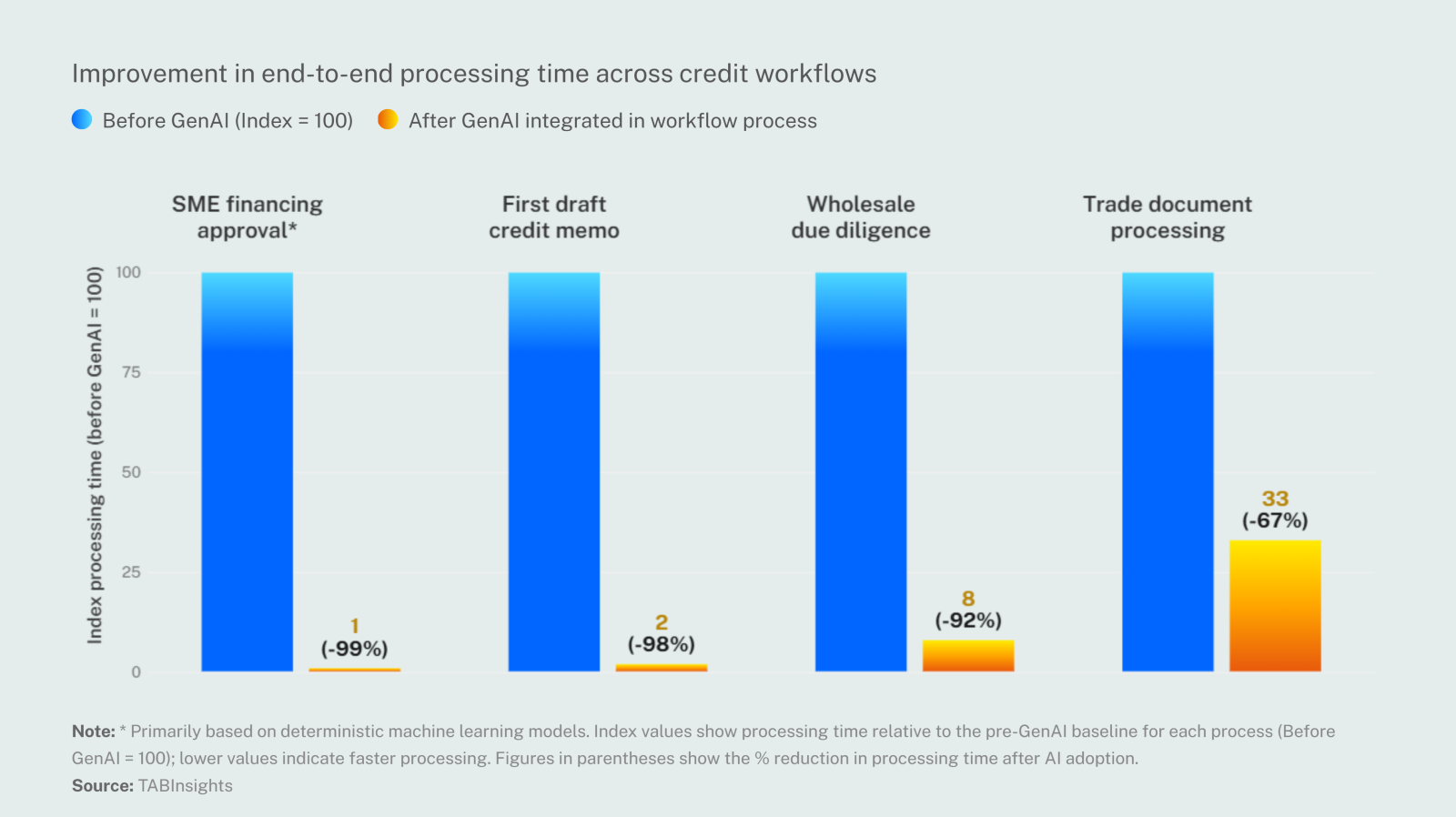



Banks are finding that AI credit copilots create value not through faster memo drafting alone, but by reducing review cycles, standardising credit papers and shifting human oversight from individual cases to system supervision.

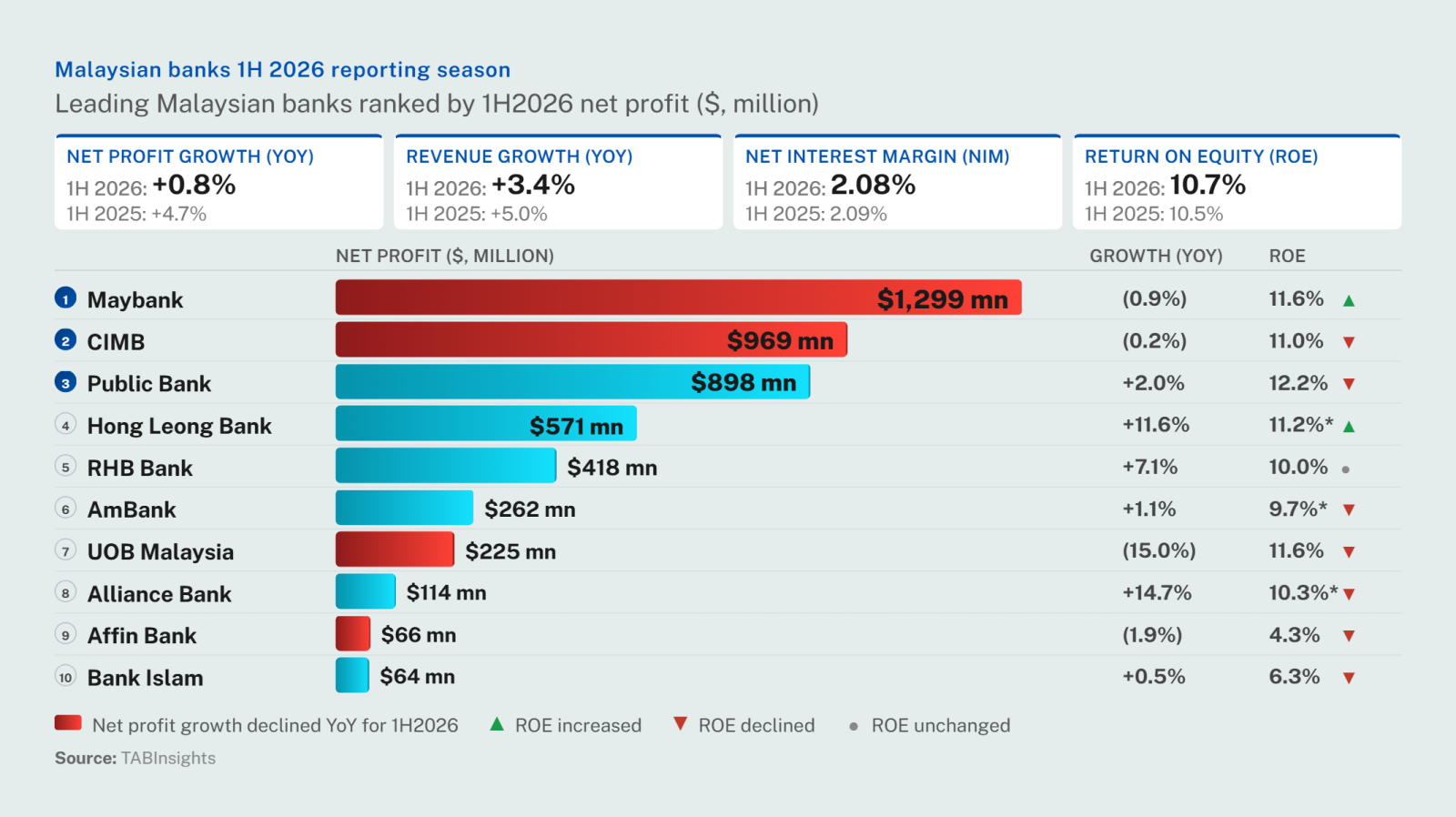
Malaysian banks' net profit was broadly flat in the first half of 2026 (1H2026), but their core lending businesses did not drive the result. Retail banking profit fell or stalled at most large groups, while corporate banking profit was likely flat. Treasury and markets income, wealth management and fund management provided most of the growth. Hong Leong Bank and Alliance Bank were the clearest exceptions, with broad-based operating strength.
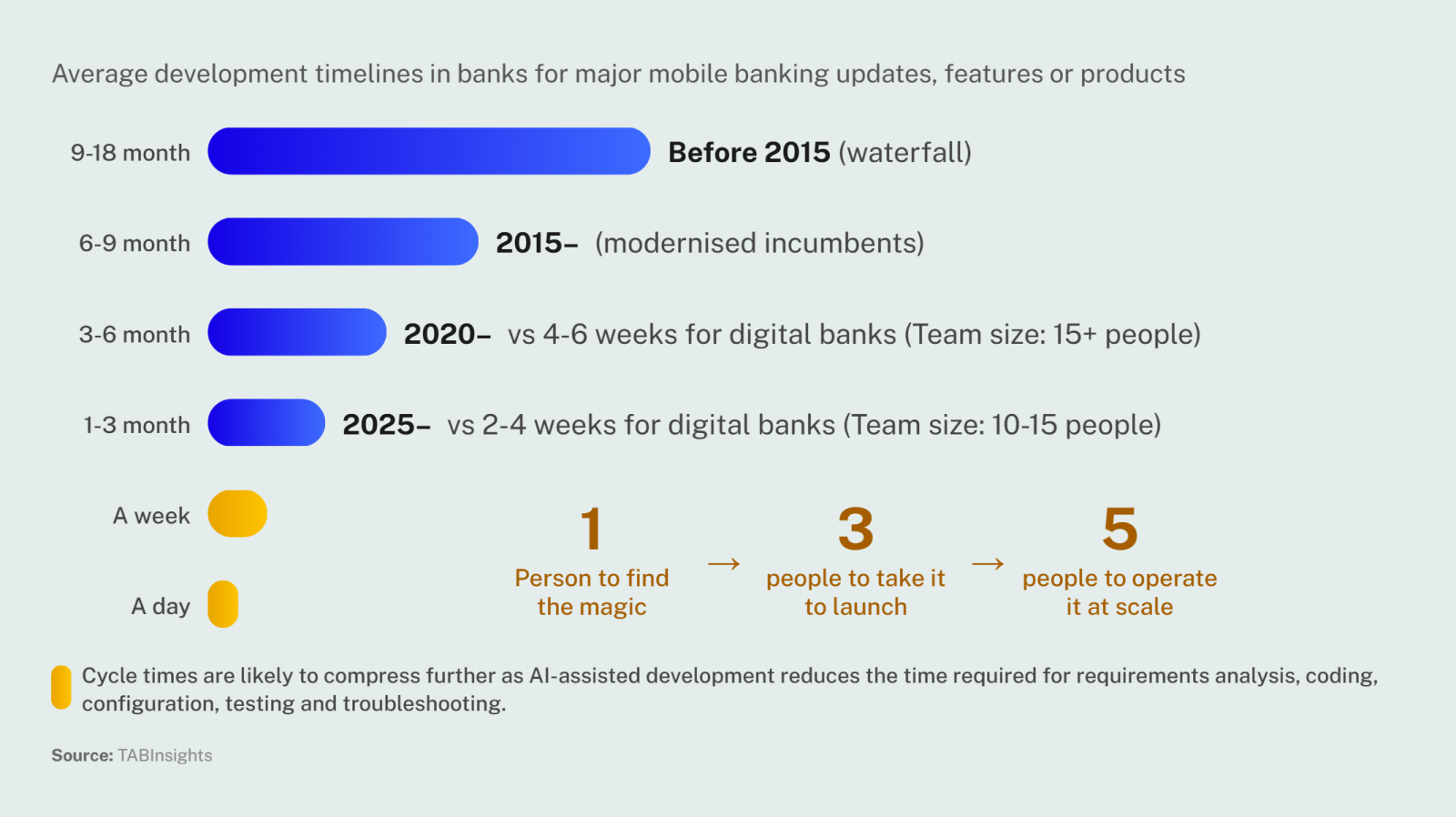
Mobile banking development cycles fall from more than a year under traditional waterfall processes to only weeks as cloud infrastructure, modular architecture, configurable products and smaller teams reduce hand-offs and rework. But faster development does not always mean faster launches, as testing, security, data readiness, certification, partner coordination and customer adoption can still slow delivery.
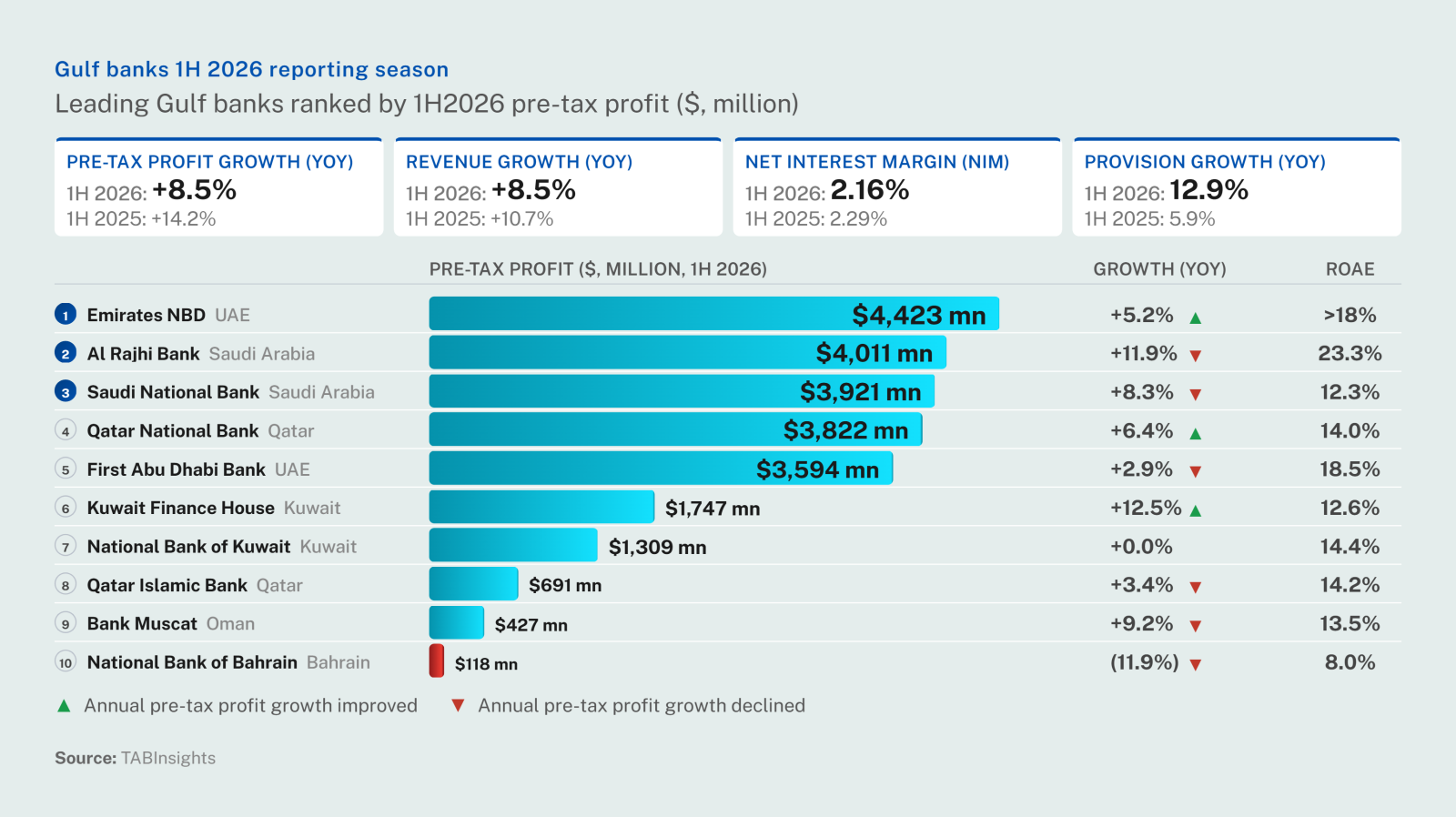
Gulf banks saw earnings momentum weaken in the first half of 2026 as slower revenue growth, narrower margins and higher provisions offset resilient credit quality. Emirates NBD, Kuwait Finance House and Qatar National Bank outperformed, while the Iran conflict amplified differences across markets and raised the stakes for loan growth, funding and credit costs in the second half of the year.
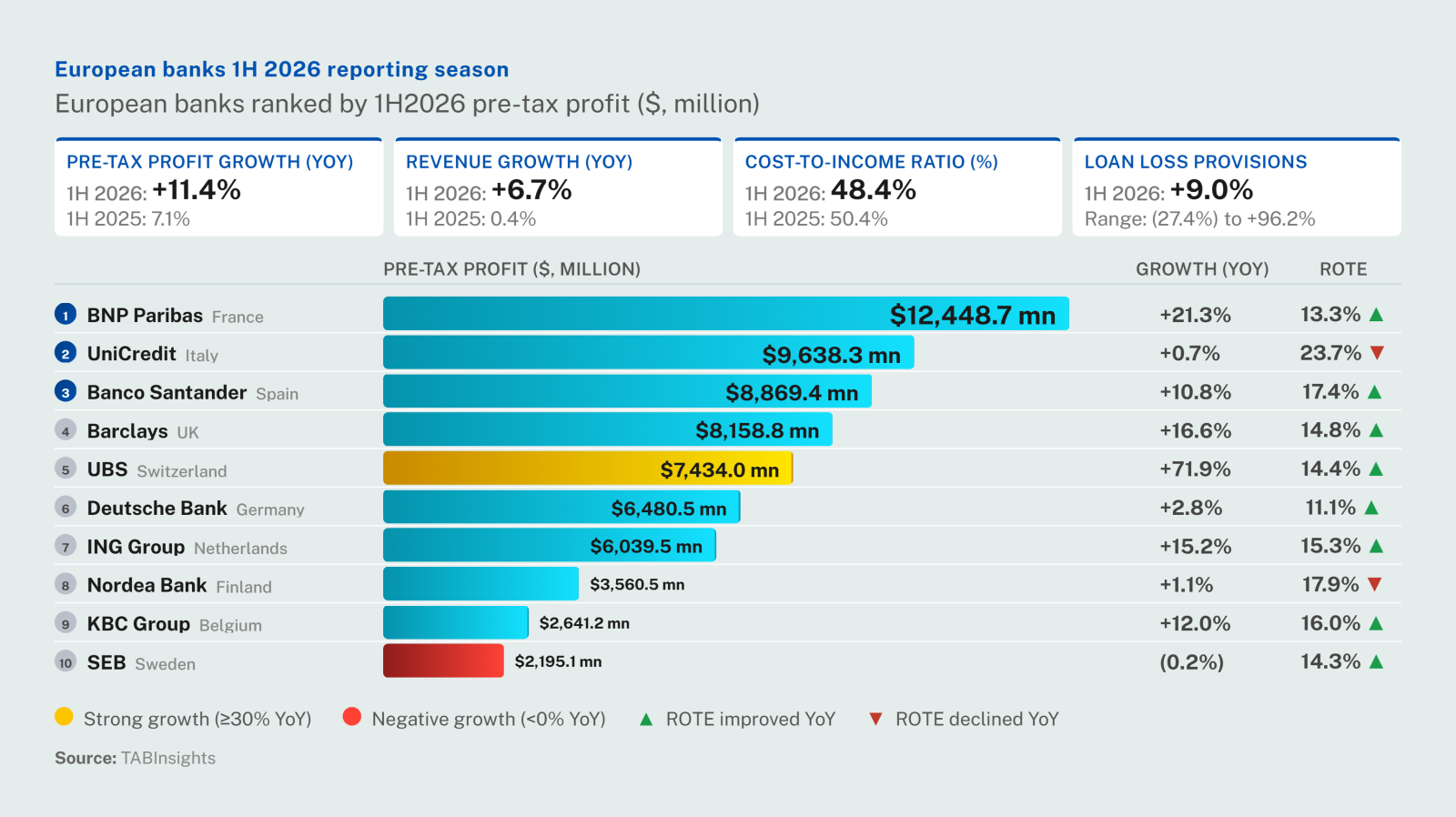
Europe’s largest banks by country showed surprising resilience in the first half of 2026, with broad-based growth across their business segments. UBS, Barclays and BNP Paribas stood out, although part of their results were boosted by corporate-centre gains, treasury performance and exceptional items. Strong earnings prompted several banks to raise their full-year guidance and reconsider mergers and acquisitions
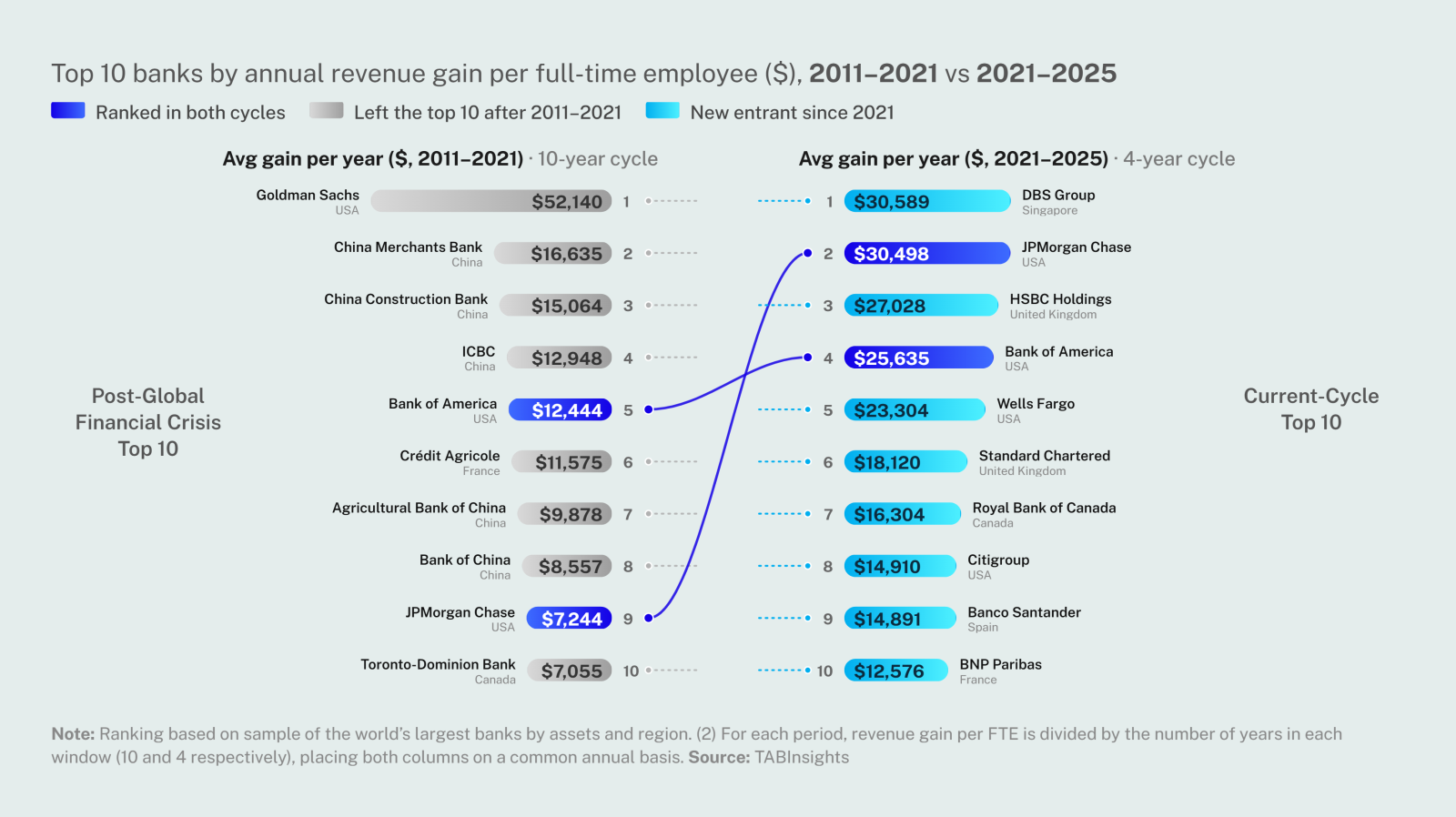
Data from 25 of the world’s largest banks by assets across regions shows that leading institutions are not only accelerating existing work but also building the capacity to serve more customers, process higher volumes of activity and grow revenue without increasing resources at the same pace.
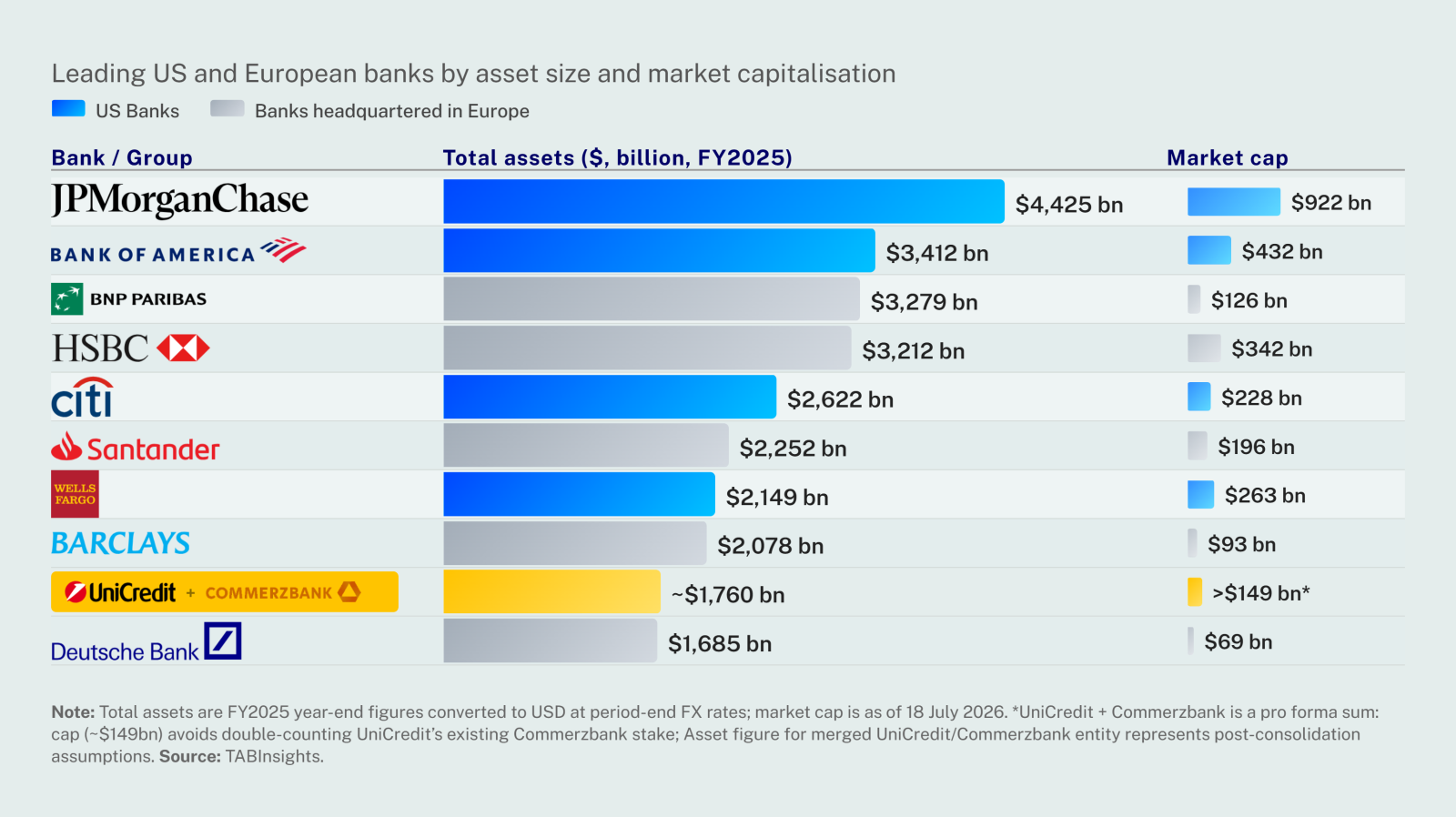
UniCredit’s path to taking full control of Commerzbank by the end of 2026 represents a decisive test of European banking consolidation, challenging political resistance and signalling that shareholder interests may increasingly outweigh national protectionism in shaping the region’s banking landscape. The resulting model would leave Commerzbank with a smaller, more focused international network designed primarily to support German, Polish and other European corporate clients rather than operate as a dispersed global lending franchise.
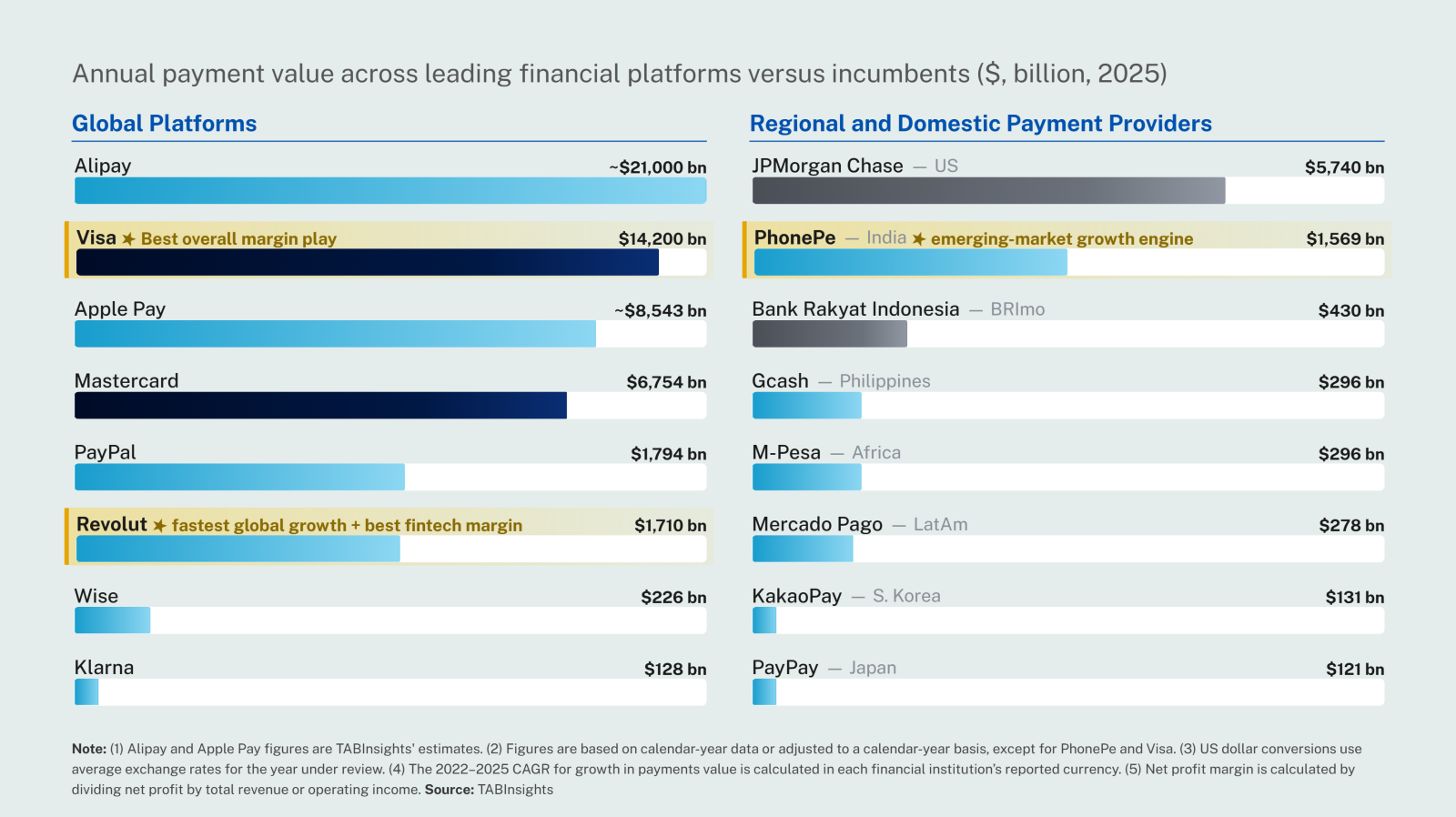
Fintech platforms have evolved from payment apps into formidable competitors to banks, using payments as a gateway to credit, savings, investments, insurance and merchant services, often without the cost and regulatory burden of a full banking licence. The world's largest platforms show that this model can deliver both enormous scale and, in most cases, strong profitability.
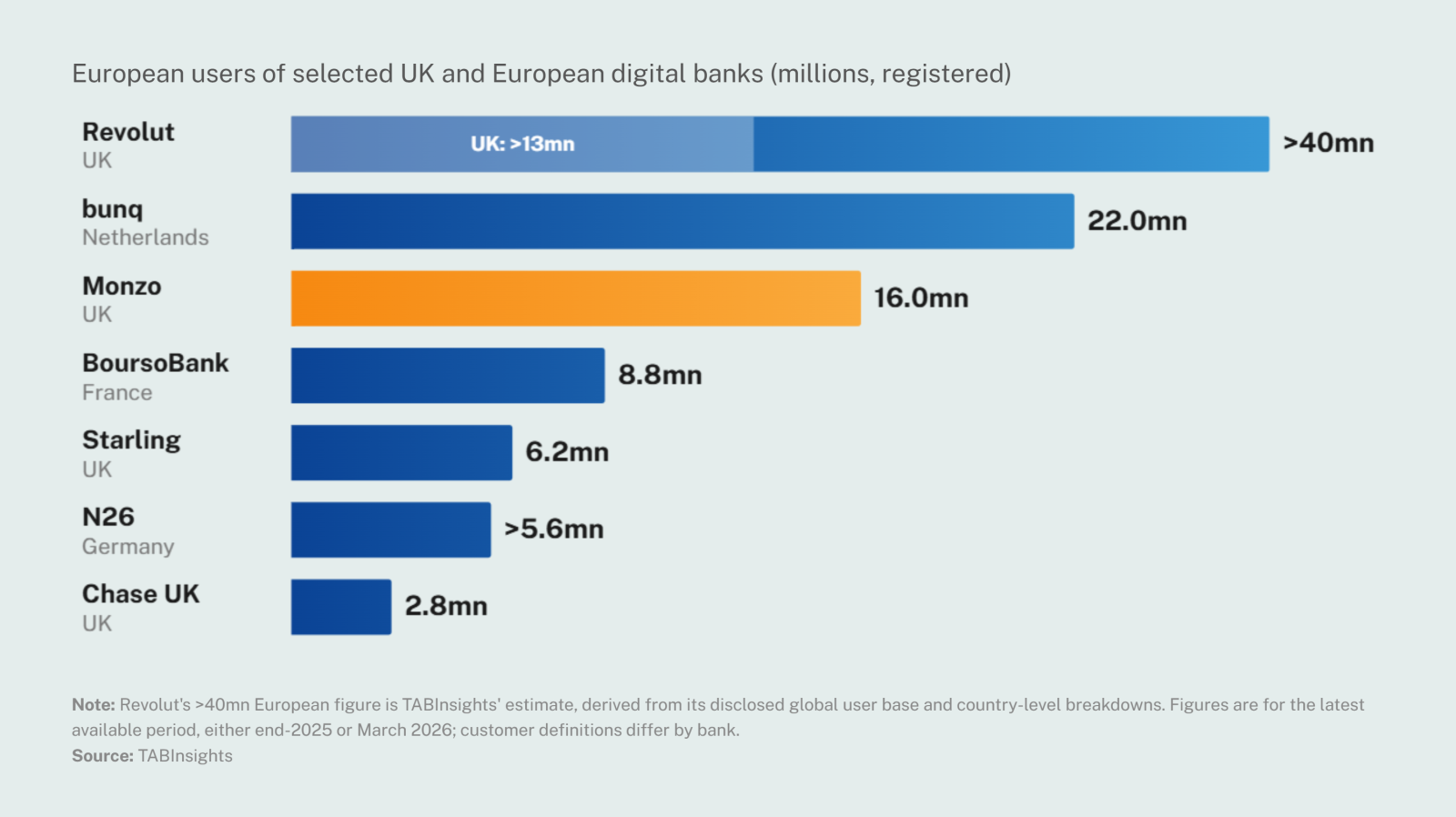
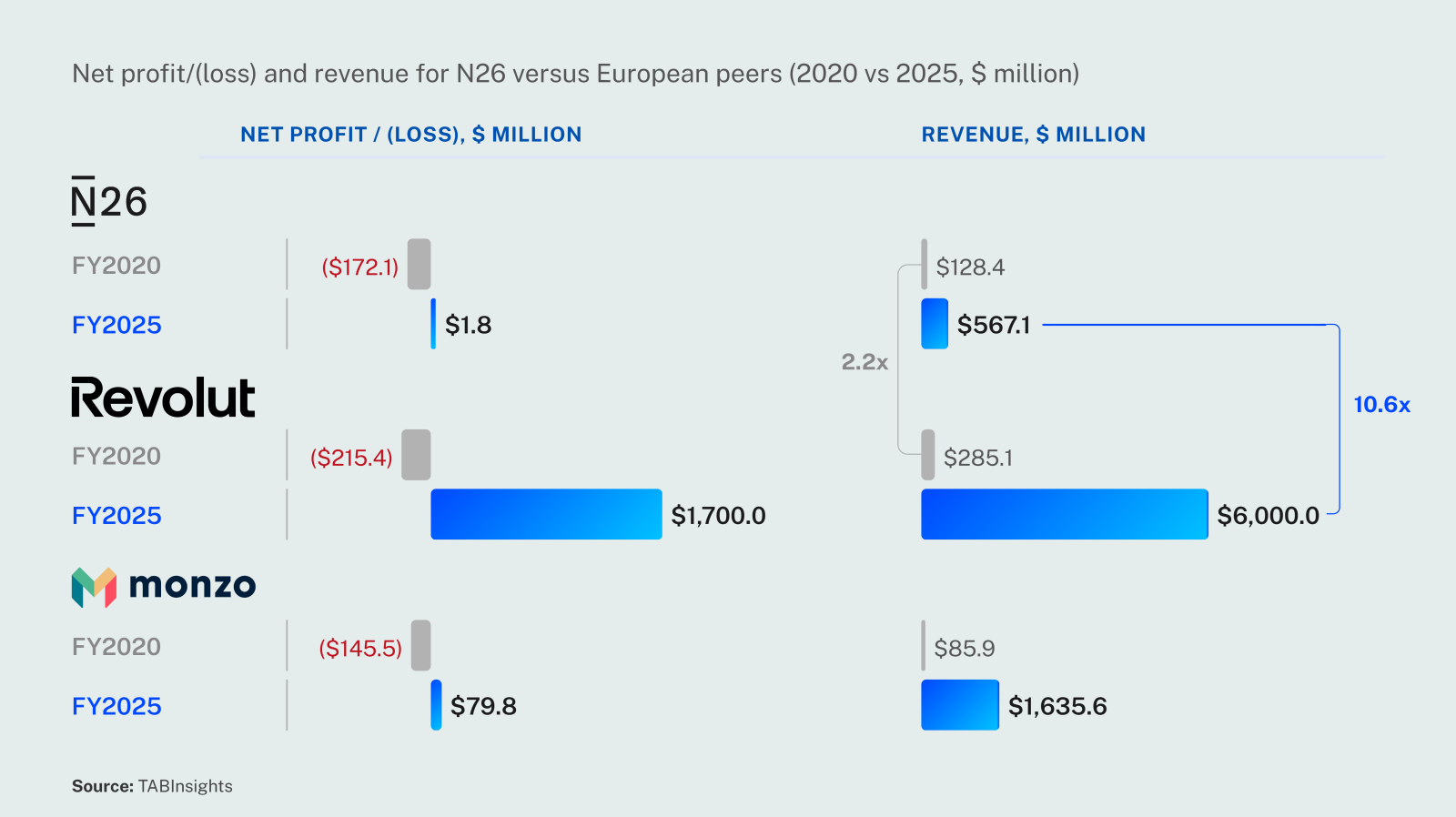
N26 delivered its first full-year net profit in 2025, but a decade of prioritising growth over bank-grade controls left the German fintech trailing European rivals, prompting a sweeping leadership overhaul.
Thai financial players entered the lower-rate cycle in the first half of 2026 with strong balance sheets and capital positions, but the key differentiator was how effectively they repriced deposits as asset yields declined, rather than credit quality. Krungsri emerged as the best-performing financial institution among its peers.
A decade ago, Nubank was a credit card start-up operating out of São Paulo. Today, at $16.3 billion in retail banking revenue (2025), it has surpassed HSBC and Standard Chartered’s global retail banking businesses and is on track to overtake Itaú Unibanco in Brazil in 2026 and Citigroup by 2027. What is emerging is not just rapid growth, but the early stages of a long-term strategy to build a global retail banking franchise.
Banks overcame the robo-adviser challenge by retaining control of the client relationship. The next battleground is the financial conversation itself, as AI platforms become the primary interface through which customers seek advice, interpret information and make decisions.